
“Comprehensibleantiquity is a participant in the Amazon Services LLC Associates Program, an affiliate advertising program designed to provide a means for sites to earn advertising fees by advertising and linking to http://www.amazon.com. Some links in the following post are affiliate links. When you click on such affiliate links, Comprehensibleantiquity may earn a commission on follow up purchases from Amazon.”
3 years ago, I moved from a full time Latin teacher to a shared position between Latin and a Family Engagement and Learning Supports Coordinator position. Last school year, I served as an Interim Assistant Principal at an elementary school, a position I will continue this fall. Literacy is at the forefront of my instructional thoughts and I’m diving into as much material around literacy as possible.
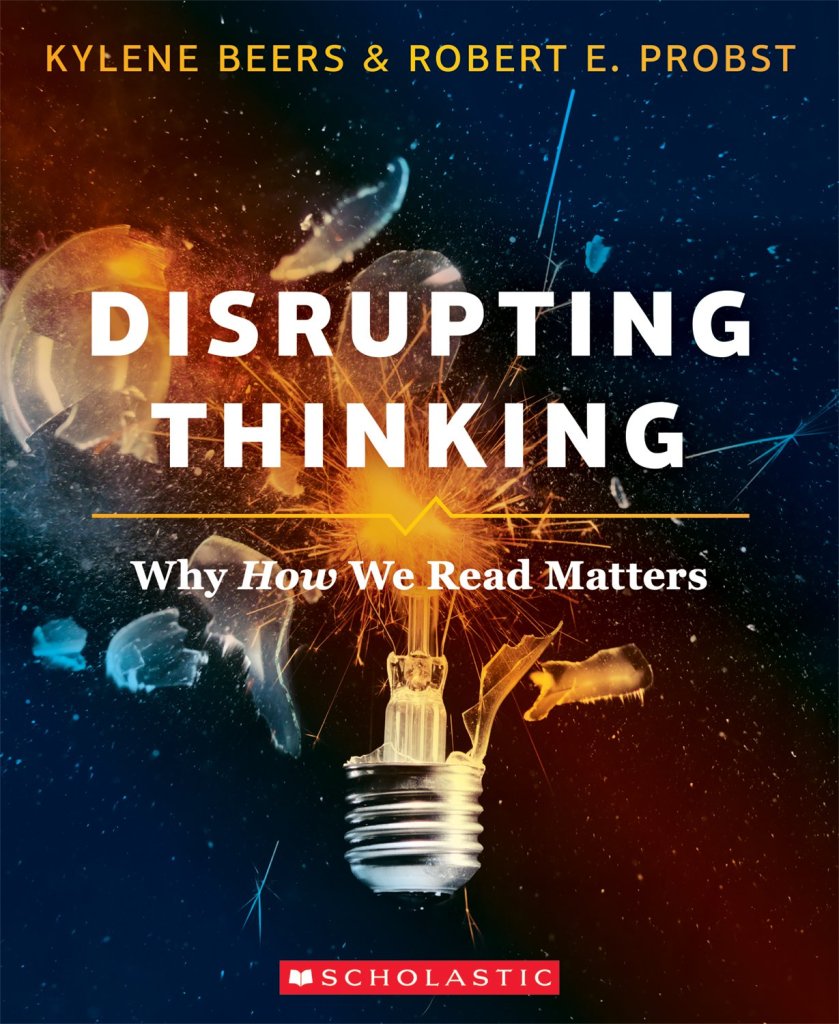
Disrupting Thinking by Kylene Beers & Robert E. Probst begins with a discussion about the importance of literacy and reading. The first section of the text focuses on the readers and offers qualitative data as stories about students and their reading experience. The examples drive the idea that students who do not like to read, tend to read less. And, often, the way schools ask students to respond to reading increases students negative feelings toward reading.
Part 1 continues to focus on the reader and the importance of a responsive reader. The theory and anecdotal examples make sense. But will the title offer ways for teachers to guide students to be responsive readers? I appreciate the turn and talk questions at the end of each section, but I am waiting in anticipation for ways to accomplish moving students toward responsiveness.
Page 36 of Disrupting Thinking brings the educator to consider how readers bring themselves into a text and offers critical responses when a reader responds with something like I don’t get it or I don’t know. Has the reader considered what the author expects the reader to already know? This section of part 1 offers clear solutions for any educator to bring into their practice, tomorrow.
The discussion of the reader ends with a exploration of the compassionate reader. This section compels educators to consider how we explore how readers feel when reading a text. The balance of reading to extract information versus a compassionate reading to understand how a text affects the reader is a critical component of growing readers. The section moves the educator to compassionately read and understand how the text may affect the educator’s views toward the important aspects of literacy and reading.
The framework presented in Disrupting Thinking in part II is to challenge readers to think book; head; heart. This section quickly offers sign posts and other materials to help students consider the text they are reading. These items offer the instructor an anchor for instructor and guidance to readers as they approach different texts. This section offers many examples for an instructor to implement quickly without major changes to their teaching framework.
Disrupting Thinking offers ways to structure a successful Silent Sustained Reading program and is a wonderful complement with the The SSR Handbook. As this title opened, I was skeptical that the book only offered large research followed by statements of blame that may cause teachers to feel guilt about literacy and reading data. Many examples begin in part 2 and continue throughout the text.

